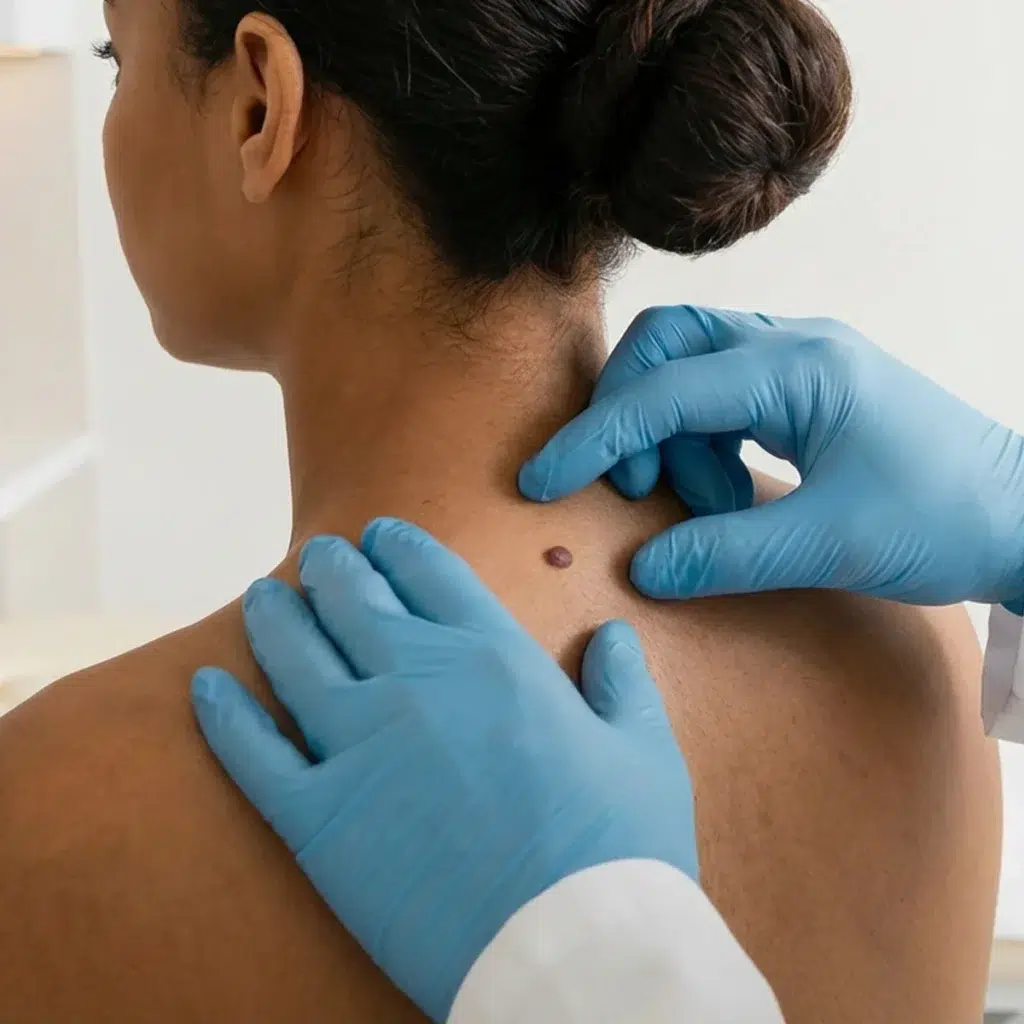
Noticing a new or changing mole can be worrying. Most moles are harmless, but Australia has one of the highest rates of skin cancer in the world, and a change in a mole is one of the most important signs that it needs to be looked at by a doctor.
This guide explains which changes to take seriously, why a new or changing mole should be medically assessed before any cosmetic treatment, and what to know if you are considering removal of a mole that has been confirmed as non-cancerous. It is general information only and does not replace a medical assessment. If you are worried about a spot right now, the most useful thing you can do is book a skin check with your GP or a skin cancer clinic.
What counts as a new or changing mole
Moles are clusters of pigment cells. Most appear in childhood and early adulthood, and many change slowly and harmlessly over time. A new or changing mole in adulthood deserves attention, particularly after the age of 30, when new moles become less common.
Changes to look for include a mole that:
- has appeared recently
- is growing in size
- is changing shape, colour or texture
- looks different from your other moles
- is raised and firm, or growing quickly
- is itchy, bleeding, crusting or not healing.
healthdirect’s guide to moles and when to see a doctor has more detail.
The ABCDE and EFG signs
Doctors often use simple checklists to describe changes that warrant assessment. The ABCDE guide covers:
- A: Asymmetry. The two halves of the mole look different.
- B: Border. The edge is irregular, notched or blurred.
- C: Colour. There are several colours or uneven shading.
- D: Diameter. The mole is larger than about 6 mm, or growing.
- E: Evolving. The mole is changing in size, shape, colour or height.
Some skin cancers do not follow these patterns. The EFG guide describes spots that are Elevated, Firm and Growing over weeks to months. A new or changing mole with any of these features should be checked promptly by a doctor.

Why a medical check comes first
A cosmetic clinic visit is not the right first step for a new or changing mole. A doctor needs to assess it to decide whether it is likely to be harmless or needs further investigation, which may include a closer examination, monitoring with photographs, or removal for pathology testing.
If a mole looks suspicious, you may be referred to a GP, skin cancer clinic or dermatologist for further assessment. Treating a mole cosmetically before it has been properly assessed could delay an important diagnosis.
If you notice a new or changing mole, book a skin check with your GP or a skin cancer clinic, and do not wait for it to change further.
Preparing for a skin check
A little preparation helps your doctor assess a new or changing mole:
- note when you first noticed the mole and what has changed
- take clear, well-lit photographs with a ruler or coin for scale, and repeat them over time
- list any symptoms such as itch, bleeding or crusting
- mention any personal or family history of skin cancer, past sunburns or sunbed use
- avoid nail polish, make-up or fake tan over areas to be checked.
Regular self-checks help you notice a new or changing mole early. Many people check their skin every few months, using a mirror or asking a partner to check hard-to-see areas.
Who is at higher risk
Anyone can develop skin cancer, but the risk is higher for people who:
- have many moles, or moles that look unusual
- have fair skin that burns easily, red or fair hair, or light-coloured eyes
- have a personal or family history of melanoma or other skin cancers
- have had blistering sunburns, particularly in childhood
- have used sunbeds or spend a lot of time outdoors
- have a weakened immune system.
If you are in a higher-risk group, your doctor may recommend regular full skin checks, and any new or changing mole should be reviewed promptly.
Sun protection and prevention
Sun protection reduces the risk of skin cancer and of new moles developing. The Cancer Council SunSmart program recommends combining several measures whenever the UV index is 3 or above, which in Sydney is much of the year:
- broad-spectrum SPF 50+ sunscreen, reapplied every two hours outdoors
- protective clothing and a broad-brimmed hat
- sunglasses
- seeking shade, especially in the middle of the day.
Sun protection does not replace checking your skin. Keep watching for any new or changing mole.
Removing a mole confirmed as non-cancerous
Some people choose to have a mole removed for cosmetic reasons, for example because it catches on clothing or jewellery or because of its appearance. This is only appropriate once a doctor has assessed the mole and is satisfied it is not suspicious.
At our clinics, a doctor assesses any mole before removal is discussed, and moles that raise concern are not treated cosmetically. Removed tissue is commonly sent for pathology testing. Our non-cancerous mole removal page explains the process.
If anything about a new or changing mole is uncertain, your doctor will recommend appropriate medical follow-up rather than cosmetic removal.
Risks of mole removal
All procedures carry risks. Possible effects of mole removal include:
- a scar, which may be flat, raised or a different colour from the surrounding skin
- bleeding, bruising or infection
- changes in skin colour at the site
- the mole growing back if not fully removed
- an unexpected pathology result needing further treatment.
Your doctor will explain the likely scar, the aftercare and what happens if pathology shows anything unexpected. You can check a practitioner’s registration on the Ahpra public register.
Aftercare and follow-up
After a mole is removed, aftercare usually includes keeping the area clean and covered as advised, avoiding picking scabs, watching for signs of infection, and protecting the healing skin from the sun to reduce scarring. Follow up on pathology results as your doctor recommends.
Continue checking your skin afterwards. A new or changing mole elsewhere, or any change at the removal site, should be reported to your doctor.
Common types of moles and spots
Not every brown spot is a mole, and many common spots are harmless. Types a doctor may describe include:
- common moles (naevi): usually small, round and evenly coloured
- atypical or dysplastic moles: larger or irregular moles that can look unusual and may need monitoring
- freckles and sun spots: flat brown marks related to sun exposure
- seborrhoeic keratoses: raised, waxy or warty spots that are common with age and harmless, though they can look concerning
- skin tags: small, soft, skin-coloured growths, often in skin folds.
Because some skin cancers can resemble harmless spots, only a doctor can tell which type a new or changing mole is.
How doctors assess a mole
When you see a doctor about a new or changing mole, they will usually ask about its history and examine it closely. Many doctors use a dermatoscope, a handheld magnifying device with a light that shows structures beneath the skin surface. Some clinics use photography or body mapping to track moles over time.
Depending on what they see, the doctor may reassure you, suggest monitoring and a review in a few months, or recommend removing the mole, or part of it, for pathology testing. Pathology examines the tissue under a microscope and gives a definite diagnosis.
If you are unsure whether you need a check, it is reasonable to ask. A quick review of a new or changing mole is far better than waiting.
How often to check your skin
There is no single schedule that suits everyone. Many people check their own skin every few months, looking at all areas including the scalp, soles of the feet and between the toes. Using the same lighting and a full-length mirror makes comparisons easier, and photographs help you notice change.
People at higher risk may be advised to have regular professional skin checks. Your GP can recommend how often you should be checked, and what to do if you notice a new or changing mole between appointments.
Methods of mole removal
Once a doctor is satisfied a mole is not suspicious, several removal methods may be discussed, depending on its size, depth and location:
- shave removal: the mole is shaved level with the skin, often for raised moles
- excision: the mole is cut out and the skin is closed with stitches, which allows the full mole to be examined
- other techniques for small, superficial spots, chosen by the doctor.
Each method has different effects on scarring and on the chance of the mole returning. Your doctor will explain why a particular method is recommended. Suspicious moles are managed through appropriate medical pathways rather than cosmetic removal.
Moles during pregnancy and hormonal change
Moles can darken or change slightly during pregnancy and other times of hormonal change. Even so, a new or changing mole during pregnancy should still be checked by a doctor rather than assumed to be hormonal.
Cosmetic removal is usually postponed during pregnancy and breastfeeding unless a doctor advises otherwise. Medical assessment of any concerning change should not be delayed.
Skin cancer in brief
Understanding the main types of skin cancer helps explain why a new or changing mole should be checked:
- Melanoma can develop in an existing mole or as a new spot. It can spread to other parts of the body if not found early, which is why change matters.
- Basal cell carcinoma is the most common skin cancer. It often looks like a pearly lump or a sore that does not heal, and it usually grows slowly.
- Squamous cell carcinoma often appears as a scaly, crusted or tender spot that grows over weeks to months, usually on sun-exposed skin.
Most skin cancers can be treated successfully when found early. Not every skin cancer starts as a mole, so any new spot, sore or change in your skin is worth reporting to your doctor.
Checking hard-to-see areas
Some skin cancers develop in places that are easy to miss. When checking for a new or changing mole, include:
- your scalp, using a hairdryer or comb to part the hair
- behind your ears and the back of your neck
- your back and the backs of your legs, using a mirror or a partner
- the soles of your feet, between your toes and under your nails
- areas that rarely see the sun.
A partner, family member or friend can help check areas you cannot see. Note anything new and take photographs so you can compare over time.
When to seek prompt medical advice
Some changes need to be looked at sooner rather than later. See a doctor promptly if a new or changing mole is growing quickly over weeks, is raised and firm, bleeds without injury, forms a sore that does not heal, or looks very different from your other moles. If you cannot get an appointment quickly with your usual GP, ask about the next available appointment elsewhere or a skin cancer clinic.
It is always reasonable to have a spot checked if you are worried. Doctors would much rather review a harmless mole than miss an early skin cancer.
Protecting healing skin and scars
After any procedure on the skin, the healing area is more sensitive to the sun. Covering the area with clothing or a dressing, and using broad-spectrum SPF 50+ sunscreen once the skin has closed, helps reduce the chance of a darker scar. Scars usually continue to soften and fade over many months.
Questions to ask about a new or changing mole
Whether you are seeing your GP, a skin cancer clinic or a doctor about cosmetic removal, these questions can help:
- Does this new or changing mole need further investigation?
- Should it be monitored, photographed or removed for testing?
- How often should I have my skin checked?
- If removal is suitable, what method will be used and what scar should I expect?
- Will the tissue be sent for pathology, and how will I receive the results?
- What aftercare is needed, and what signs should I watch for?
Frequently asked questions
Is every new or changing mole dangerous?
No. Many changes are harmless, but only a medical assessment can tell. A new or changing mole should always be checked rather than watched indefinitely without advice.
Can a cosmetic clinic check my mole?
A cosmetic appointment is not a substitute for a skin check. If you have a new or changing mole, see your GP or a skin cancer clinic first.
Will mole removal leave a scar?
Any removal can leave a mark. Your doctor will explain the likely appearance based on the mole’s size, location and your skin.
How quickly should I get a new or changing mole checked?
Promptly. Book an appointment as soon as you notice a change, and sooner if the mole is growing quickly, bleeding or not healing.
Should I photograph a new or changing mole?
Yes. Clear photographs with a ruler for scale, taken in the same lighting, help you and your doctor see whether a mole is changing.
Can a mole grow back after removal?
Sometimes, particularly after shave removal. Tell your doctor if pigment returns at the site, so it can be reviewed.
Do I need a referral for a skin check?
You can usually book a skin check directly with a GP or skin cancer clinic. A referral may be needed to see a dermatologist. Your GP can advise on the right pathway for a new or changing mole.
Booking a consultation
If a doctor has already assessed your mole as non-cancerous and you would like to discuss removal, consultations are available at our North Parramatta clinic and our Chatswood clinic. For a new or changing mole that has not yet been checked, please see your GP or a skin cancer clinic first.
Book a consultation or call (02) 8041 3293.
Results vary between individuals. All procedures carry risks. A consultation with a registered health practitioner is required to assess suitability. This article is general information and does not replace individual medical advice.