
FLAWLESS AESTHETICS · CONCERNS
Loss of
volume.
Changes in facial fullness can raise different questions. Talk through the areas you have noticed and what, if anything, you would like to explore.
A consultation does not commit you to a procedure.
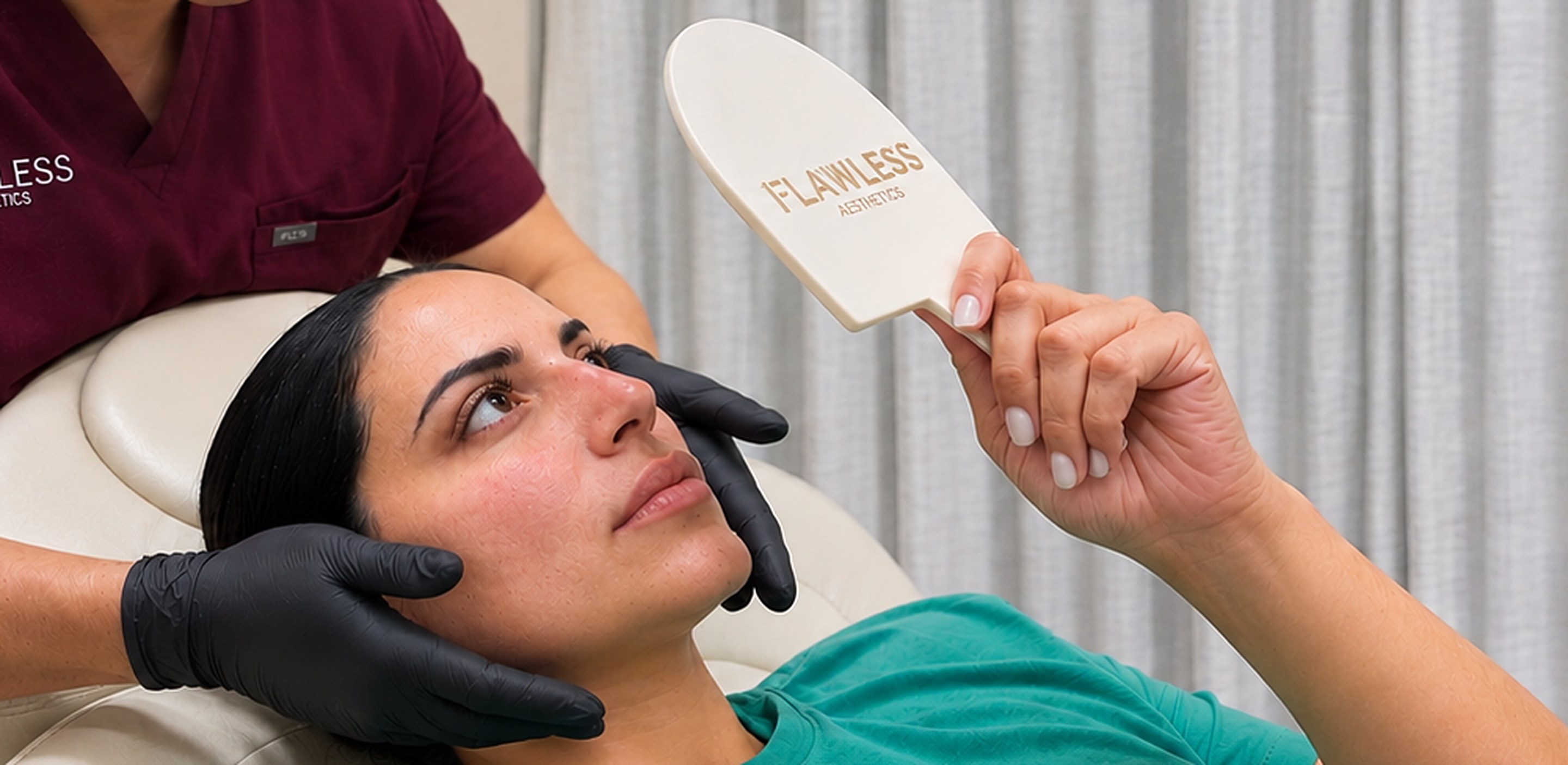
Understanding
facial fullness.
What have you noticed?
Your appointment can focus on the cheeks, temples or another area that feels different to you. Describe the changes in your own words; you do not need to choose a procedure first.
Looking at the whole face
Facial assessment considers structure, soft-tissue distribution and the way features relate to one another. An area that looks less full may need a different discussion from skin laxity or surface texture.
A plan, with room to decide
Ask which options are appropriate, what they cannot change and what doing nothing would mean. Your practitioner will explain relevant risks, recovery and costs before you make a decision.
EXPLORE BY CONCERN
Services to discuss for loss of volume.
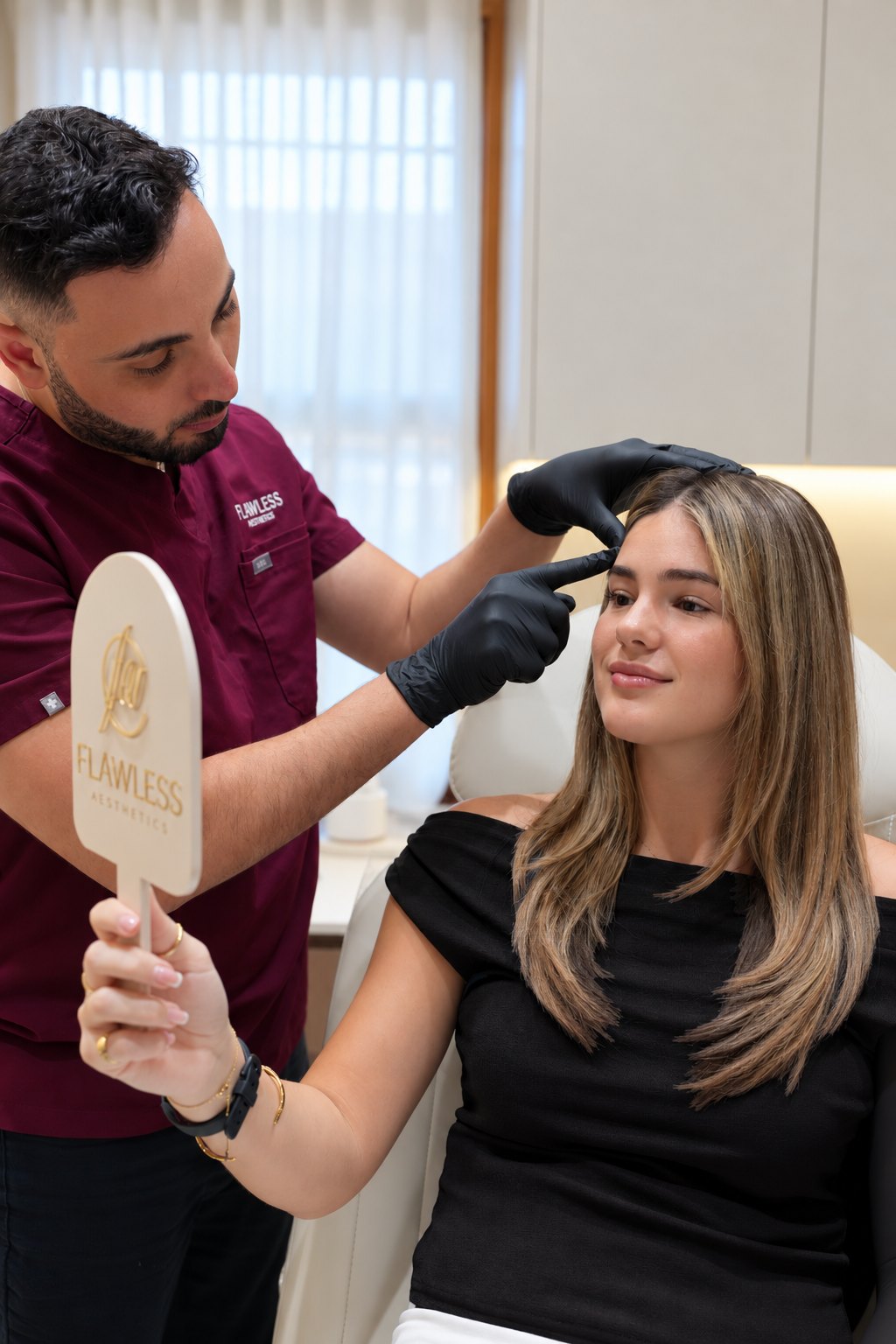
Your treatment
journey.
Time for your questions.
Space to decide.
01Plan your consultation
Share the facial concerns you want assessed, your medical history and previous procedures. Your practitioner will review your individual features.
02Discuss suitable options
Discuss realistic possibilities, evidence, risks, recovery, costs and alternatives. No procedure may be the appropriate choice.
03Decide your next steps
Take time to consider the information. Before any later procedure, confirm its preparation, aftercare and follow-up plan.
04Your treatment
If treatment is suitable and you choose to proceed, your practitioner will explain the agreed procedure, its risks and what to expect before it begins.
05Aftercare & support
Follow the personalised instructions provided by your practitioner. Ask about expected recovery, warning signs, follow-up and who to contact if you have concerns, including outside clinic hours.
Your questions.
Why does my face look less full as I get older?
Facial fullness can change as the underlying fat, skin and bone change with age. This can alter the appearance of the cheeks, temples and lower face. An assessment helps identify what is contributing to the changes you have noticed.
Is loss of volume the same as loose skin?
They are different concerns, although they can occur together. Volume loss refers to reduced fullness beneath the skin; laxity refers to loosening or sagging. Your practitioner will assess both because an approach aimed at one may not address the other.
Which areas can I have assessed for volume loss?
You can discuss hollow-looking cheeks or temples, changes around the mouth, or reduced lip fullness. Assessment considers the area in relation to your whole face. Not every area is suitable for a cosmetic procedure.
What treatment options can I discuss for facial volume loss?
Start with a cosmetic consultation to establish whether the change involves volume, skin laxity or both. Ask your practitioner to compare options for the specific area, including what each can and cannot change, its risks and alternatives. Lip concerns can be discussed in a lip consultation. A skin-quality or collagen-focused approach is not automatically a substitute for addressing lost volume.
Can treatment preserve my natural facial proportions?
Tell your practitioner which features you want to preserve and what would feel like too much change. Planning should consider your existing proportions and the limitations of any proposed procedure. A particular appearance, symmetry or result cannot be guaranteed.
What risks and recovery should I understand?
These depend on the procedure and area. If an injectable volume treatment is being considered, possible complications include swelling, bruising, infection, lumps and asymmetry. Accidental blockage of a blood vessel can cause tissue damage and, rarely, vision loss or stroke. Ask for the specific recovery advice, warning signs and urgent contact arrangements before deciding.
How long would a change in facial fullness last?
There is no single duration for every procedure or person. The method, area and your individual response matter, and facial ageing continues. Ask when a result can be assessed, how long it may last and what a review would involve. Further treatment should be a separate decision.
Need help?
Book online, call, email or use the enquiry form below.
Parramatta & Chatswood
(02) 8041 3293
Choose how to get in touch.
Or send our team an enquiry using the form below.
General information only. An individual clinical assessment and informed consent are required before any procedure. Risks, recovery and outcomes vary. Services are intended for adults aged 18 and over. Read our consultation and safety information.