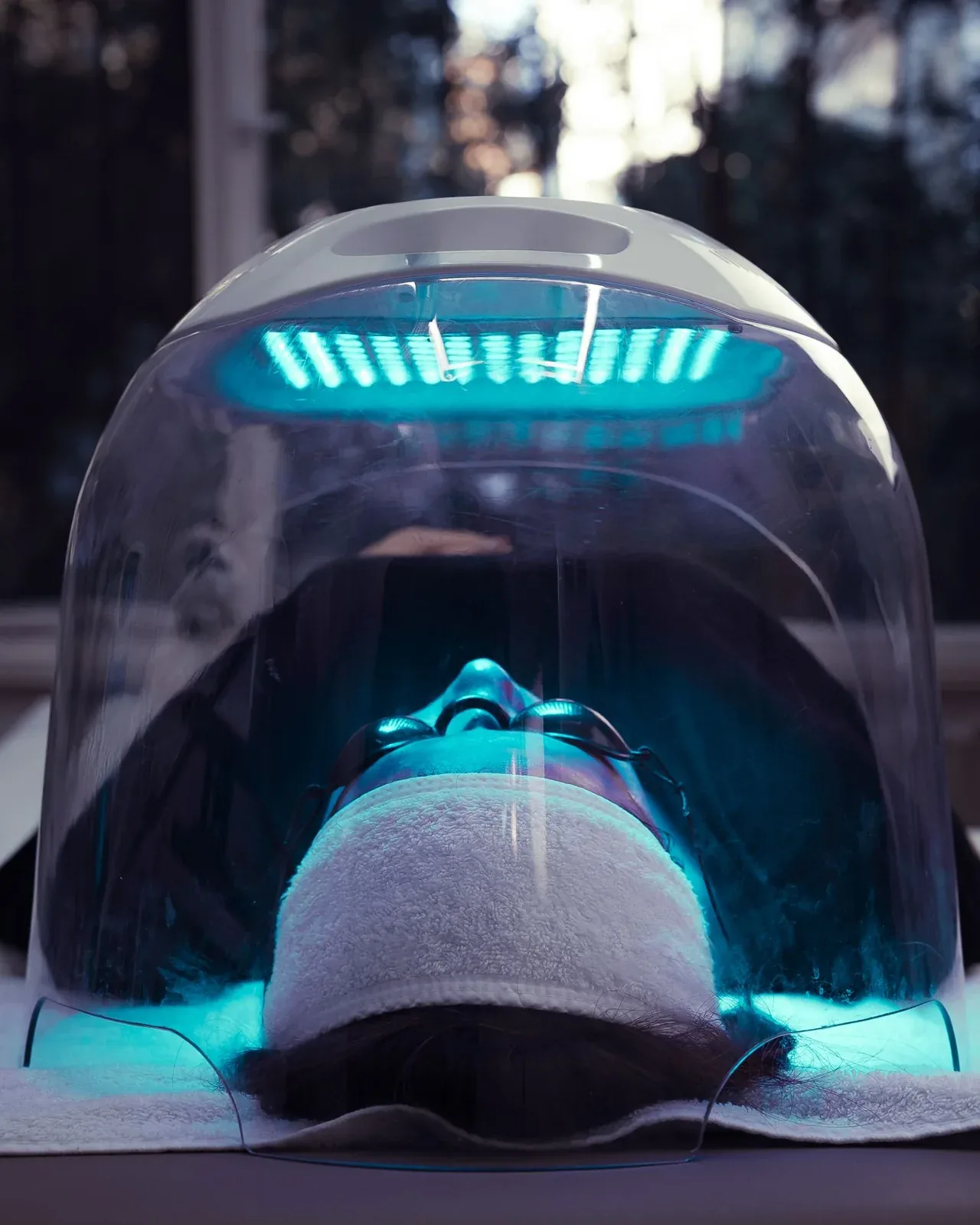
Red and blue light have different uses
Red-light approaches have been studied for some changes in skin appearance. Results vary, and research on one device cannot automatically be applied to another. Long-term effects and the best treatment schedules remain areas of research.
Blue and other visible-light treatments may be considered for some acne concerns, but they do not address every type of acne and may form only part of a treatment plan. Persistent acne needs an individual assessment rather than a device chosen solely by its colour.
Read the American Academy of Dermatology’s information on red light therapy and light-based acne treatments.
Discuss safety and eye protection
Light treatment is not risk-free. Skin irritation or discomfort can occur. Tell the practitioner about light sensitivity, relevant conditions, medicines and previous pigment changes. Follow the device-specific eye-protection instructions and use the protection recommended for that device.
Ask what symptoms should lead to stopping a session and how any problem would be assessed. Do not assume that a clinic device and a home-use mask have the same settings, evidence or precautions.
Questions before booking a course
- Which device and wavelengths are proposed?
- What evidence supports its use for my concern?
- What benefit is realistic, and what may not change?
- What risks or precautions apply to my skin and health history?
- How will progress be reviewed before further sessions?
- What is the total cost, and what alternatives are available?
A longer or more frequent session is not automatically more effective. The plan should follow the device instructions and clinical assessment, with a review of whether it is helping.
For individual enquiries, see our LED consultation page. This overview does not confirm the indications of a particular clinic device.
General information only. Your treating practitioner’s advice and written instructions should guide your individual care.