This article explains what PRP is, how it is typically prepared, and the questions worth asking at a consultation. It is general information, not personal medical advice. A practitioner can only talk about suitability, options, risks and alternatives after an individual assessment.
If you would like to discuss PRP for a skin or scalp concern, you can read about PRP consultations at Flawless Aesthetics in North Parramatta or Chatswood. A consultation does not commit you to a procedure.
What the name does — and does not — tell you
PRP stands for platelet-rich plasma. Platelets are a normal component of blood. Plasma is the liquid part of blood in which those cells are carried. In clinic settings, “PRP” is used as a short label for a preparation in which platelets have been concentrated.
The label is not a standard recipe. Clinics may use different equipment, different processing steps and different ways of applying the preparation. Two services that both use the name PRP can still differ in what is prepared and in the evidence that relates to a particular concern. It is reasonable to ask what would actually be prepared for you, rather than assuming that the name is enough.
How PRP is typically prepared
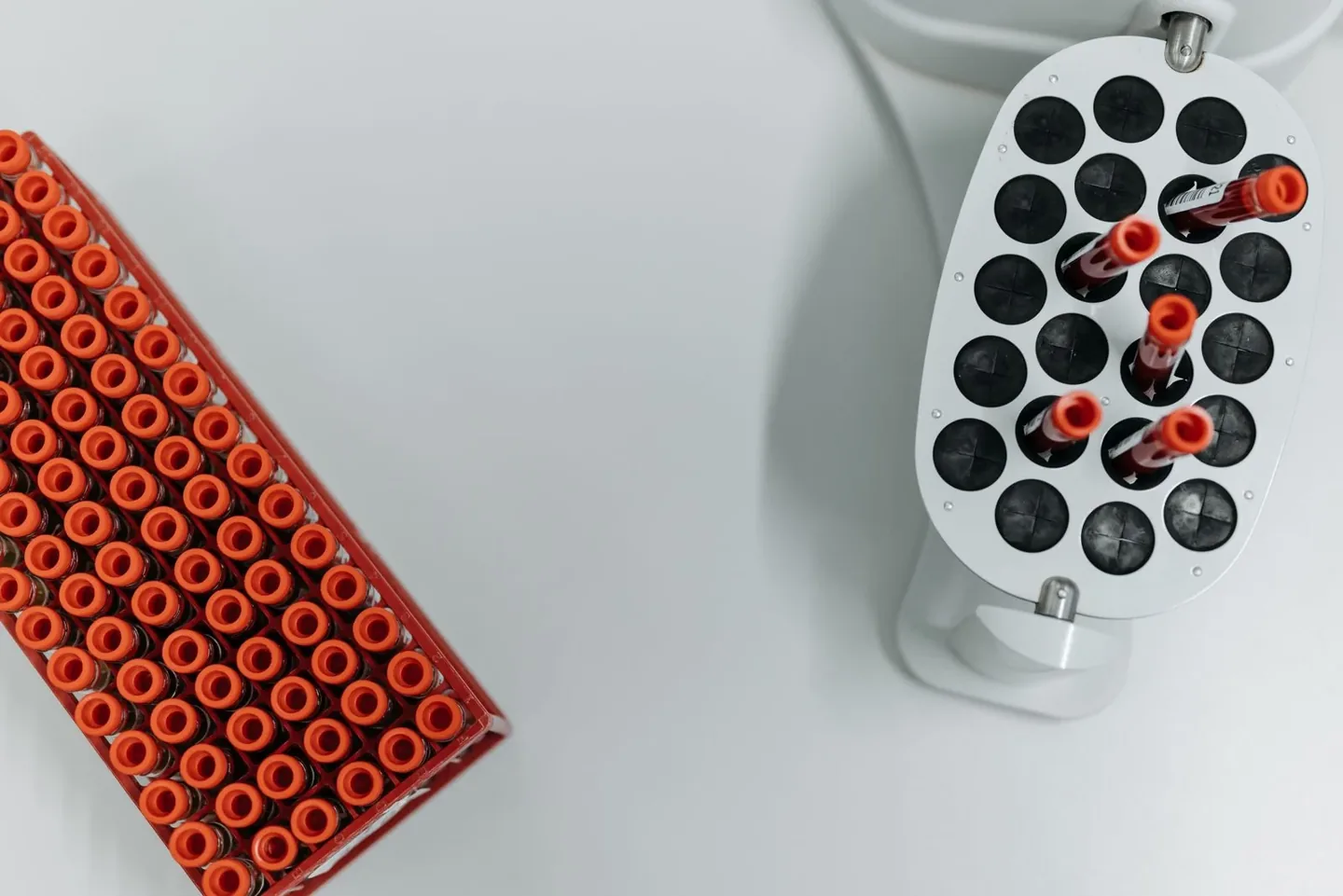
In outline, a consultation that leads to a PRP procedure usually involves taking a blood sample, processing that sample — often in a centrifuge — and collecting a portion that contains a higher concentration of platelets in plasma. That preparation may then be applied to the area being discussed. The exact method, the volume collected, and how the preparation is used should be explained in your appointment, because these details are not the same everywhere.
Some clinics also offer platelet-rich fibrin (PRF), or use a blood-derived preparation alongside another procedure. Those are not automatic substitutes for one another. The next sections explain why the differences matter, and what to ask.
How practitioners describe the idea behind PRP
Platelets take part in normal blood clotting and also carry a range of signalling proteins. Some descriptions of PRP talk about those components and a possible role in tissue recovery. That is a general biological idea. It is not a promise that a cosmetic procedure will improve a particular skin or scalp concern, and it is not evidence that a given clinic method will work for you.
Any discussion of possible benefits should be set against the evidence for that specific preparation and method, the limits of that evidence, and the other options available, including no procedure. Results and timelines vary, and a general article cannot predict an outcome.
PRP and PRF are not interchangeable
Platelet-rich fibrin (PRF) is another blood-derived preparation. It is prepared differently from PRP, and it is not simply a newer name for the same thing. Describing a preparation as newer, natural or more advanced does not prove that it is safer or more effective.
Ask what would actually be prepared, how it would be used, and what evidence supports that specific approach for the concern you want to discuss. If both options are mentioned, ask how they differ in preparation, use, recovery and evidence, rather than choosing based on the label.
Skin and scalp concerns are different questions
Evidence for one preparation, application or condition cannot automatically be applied to another. A discussion about the appearance of the skin is not the same as a discussion about hair loss. If hair loss is your concern, ask for an assessment of its cause before deciding whether any procedure is appropriate. Further assessment or a referral may be the more suitable next step.
If you are considering PRP alongside another procedure, such as microneedling, ask whether the combination changes the evidence, the risks, the recovery or the aftercare. Standard microneedling, radiofrequency microneedling and procedures that add another product are not interchangeable.
Who a consultation may be relevant for
PRP is not automatically suitable for everyone, and wanting to understand it is not the same as being advised to go ahead.
A consultation may be relevant if you want to discuss a skin or scalp concern and understand whether a blood-derived preparation is an option worth considering — or whether another approach, further assessment, or no procedure is more appropriate. Your practitioner will consider your health, your medicines and supplements, any previous procedures, and the nature of the concern itself.
It helps to tell the practitioner about bleeding or platelet disorders, current illness, previous reactions to procedures, and all medicines and supplements you take. If you are pregnant, breastfeeding or planning a pregnancy, say so. Cosmetic PRP procedures are generally not recommended during pregnancy or breastfeeding.
Do not stop a prescribed medicine unless your treating clinician advises you to do so.
What a consultation typically involves
At Flawless Aesthetics, PRP is discussed in a clinical consultation at the North Parramatta or Chatswood clinic. The appointment is a discussion, not a commitment to treatment.
It typically covers the concern you want to talk about, your medical and treatment history, whether a procedure may be a suitable option, and the risks, limitations, costs, recovery and alternatives if a procedure is being considered. You can see how a PRP consultation is structured on the service page, including what to bring and how decisions are made afterwards.
Written information should be available before you decide. If you would rather start with a question for the team, you can also contact the clinic.
Questions to ask about evidence and the plan
These questions are a starting point. They are not a script, and they do not replace the practitioner’s advice.
- What would be prepared, and how would it be used in my case?
- What outcome is being discussed, and how would it be assessed?
- What evidence relates to this preparation and method for my concern?
- What uncertainty remains, and what could this procedure not address?
- What alternatives are available, including no procedure?
- Who would collect, prepare and administer the material, and what qualifications do they hold?
- What are the relevant risks, and how would complications be managed?
- What recovery, follow-up and costs should I expect, in writing, before I decide?
A fixed results date or a set number of repeat sessions should not be assumed from a general article. If a course of appointments is suggested, ask why, and what would lead the practitioner to stop or change the plan.
Aftercare questions to clarify
Aftercare depends on the procedure, the area treated and your medical history. There is no single routine that applies to every PRP appointment, so it is better to ask for written instructions than to follow generic advice from an article.
Questions that are often worth asking include:
- What should I expect in the hours and days afterwards?
- Are there activities, skincare products or environments I should avoid, and for how long?
- What warning signs should I look for, and who do I contact, including outside clinic hours?
- When is follow-up planned, and when can I usually return to work or exercise?
Aftercare depends on the procedure, the area treated and your medical history. Your treating practitioner’s written instructions should guide your individual care.
Risks, suitability and medicines
Using your own blood does not make a procedure risk-free. Blood collection and administration can involve pain, bruising, bleeding and infection. Risks also depend on the site, how the preparation is handled, and any accompanying procedure. Ask for the risks that relate to the proposed plan, rather than relying on a general promise of mild effects.
Suitability cannot be determined from a webpage. A consultation may lead to a treatment discussion, further assessment, a referral, or a recommendation not to proceed.
The Therapeutic Goods Administration (TGA) explains that the regulation of these preparations depends on how they are manufactured and supplied. This overview does not confirm the regulatory status or suitability of a particular clinic preparation.
How this relates to other procedures
PRP is sometimes discussed alongside other clinic procedures, including microneedling. That does not mean the combination is suitable, or that it is simply “PRP plus” another service. Each procedure has its own evidence, risks and recovery. Ask whether a combination is being proposed, why, and what would change if you had one procedure and not the other.
For a comparison of microneedling approaches, see Microneedling approaches: what to compare. To discuss a PRP consultation itself, use the PRP consultations page.
Talk with the Flawless team
If you would like to discuss whether a PRP consultation is appropriate for you, the Flawless Aesthetics team can see you in North Parramatta or Chatswood. The appointment is a chance to ask the questions in this article and to hear advice that relates to your situation.
General information only. Your treating practitioner’s advice and written instructions should guide your individual care.